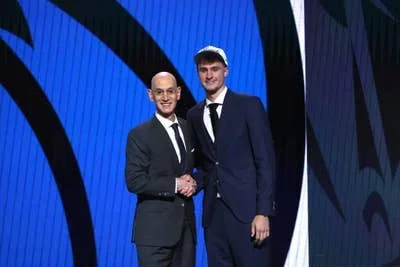
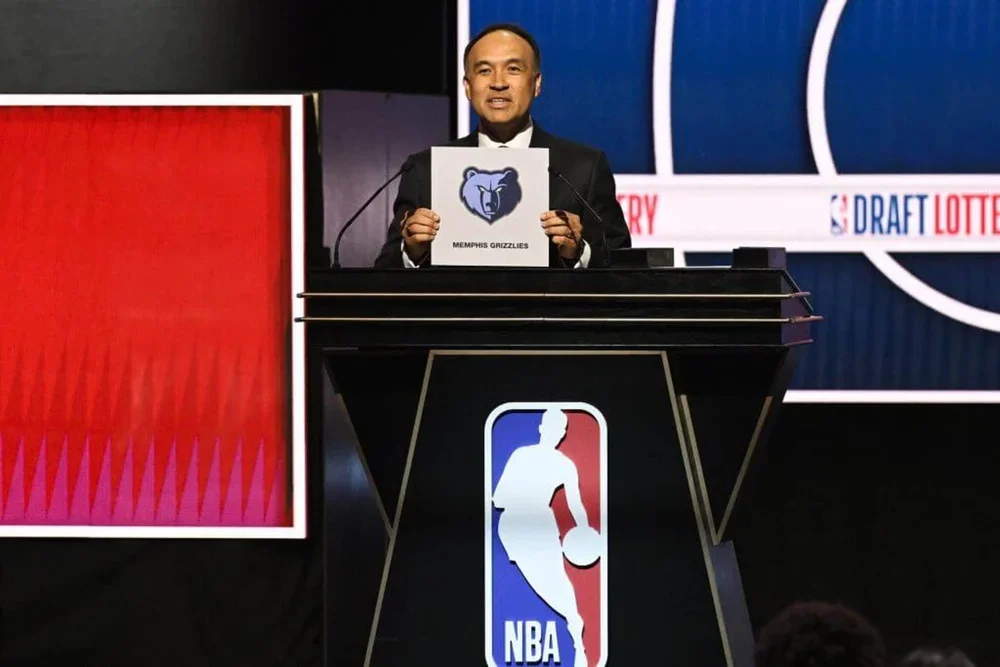
With the Grizzlies landing a top-three pick, they could add a cornerstone in an offseason filled with uncertainty around Ja Morant’s future. Chris Schwegler / Getty Images
The basketball gods seemed to sleep on Sunday. The Washington Wizards, Utah Jazz, and Memphis Grizzlies—the three most blatant and shameless tankers of the 2025-26 season—still walked away with the top three picks in the loaded 2026 draft lottery.
For what should be the last time, the strategy of losing paid off. Imagine the outcry if the league hadn’t planned to reform tanking after this season. All three teams shelved healthy stars, relied on subpar substitutes, and rushed G League signings into 40-minute roles on short notice. I’ve been in that position as a former vice president of basketball operations for the Grizzlies, and I’d have done the same—the system incentivizes it. But it underscores why change is desperately needed.
At the trade deadline, Memphis sat 20-29, just two games out of the Play-In Tournament. A 17-16 finish would have pushed them past the Golden State Warriors for the last Play-In spot. Instead, they went 5-28. Then the Wizards turned off Trae Young and Anthony Davis with vague injuries, finishing 3-29. Utah went 6-24, but two of those wins came against Memphis and Washington. The Jazz and Grizzlies also played one of the most embarrassing games in recent memory—a 147-101 Utah win where only three players from both teams are expected to make an NBA roster next season. Utah started Oscar Tshiebwe, Kennedy Chandler, and Blake Hinson and won by 46, which says everything about Memphis’ lineup.
Unfortunately, those shameless tankers were the biggest lottery winners. But plenty else happened on Sunday, some of it genuinely positive. Let’s break down the other winners and losers:
Loser: Unintended consequences
A key question from league executives after my piece on lottery reform was how proposed rules—such as banning teams from winning the lottery in consecutive years or picking in the top five three years straight—would work in practice. Since picks are tradeable and teams can own multiple picks in one draft, complications arise quickly. For instance, does the rule apply to a team landing at No. 1 in consecutive years, or to their pick falling at No. 1? And in the top-five rule, what if a future Sam Presti-type accumulates four lottery picks but has already picked in the top five in the previous two drafts? Would none of those picks be allowed to land in the top five? Either scenario creates an arbitrage opportunity for teams to swap picks because a pick’s value changes in another team’s hands—possibly even within the same lottery. This is more likely in the proposed “3-2-1” system, where multiple teams share identical odds.
Unfortunately, the chance for maximum chaos in 2027 largely evaporated based on which teams landed in the top five. Washington can’t win the top pick next year again, but the Wizards’ only first-round pick next season remains their own.