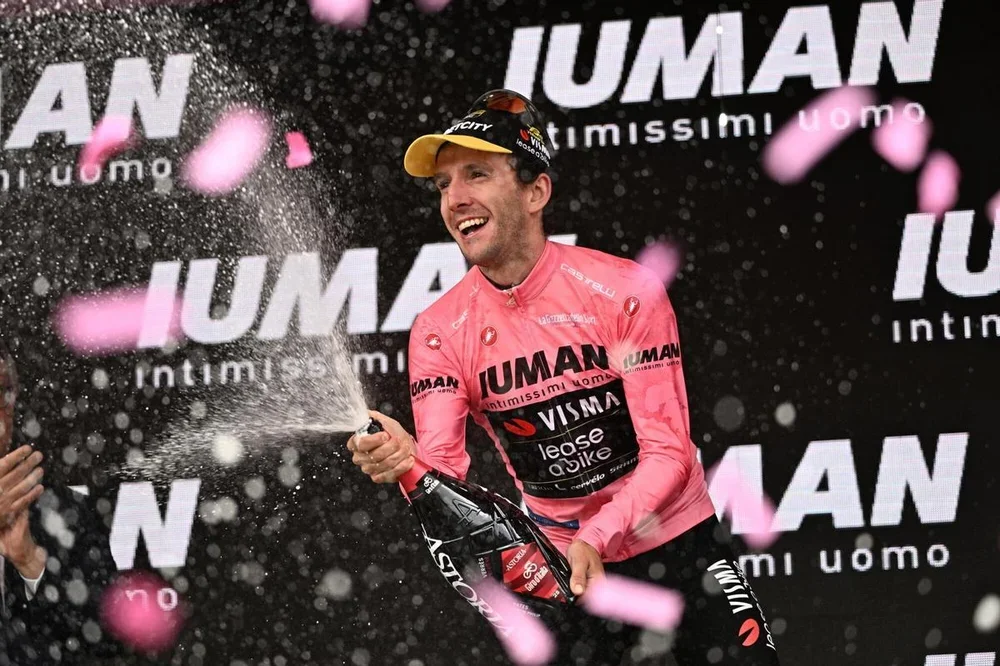
The *maglia rosa* is worn by the rider who has completed the stages in the lowest cumulative time. Each day, after crossing the finish line, the times of all riders are added together. Whoever has the best overall record steps onto the podium, receives the jersey, and sleeps as the leader. They may have won the stage or not. They may have attacked or simply survived. In a Grand Tour, survival is often a form of command.

**Why is the Giro’s leader jersey pink?**
The color is no coincidence. Pink is historically linked to *La Gazzetta dello Sport*, the Italian newspaper that spearheaded the creation of the Giro and whose pages were that color. Therefore, wearing the *maglia rosa* means entering a tradition that extends far beyond a mere classification.
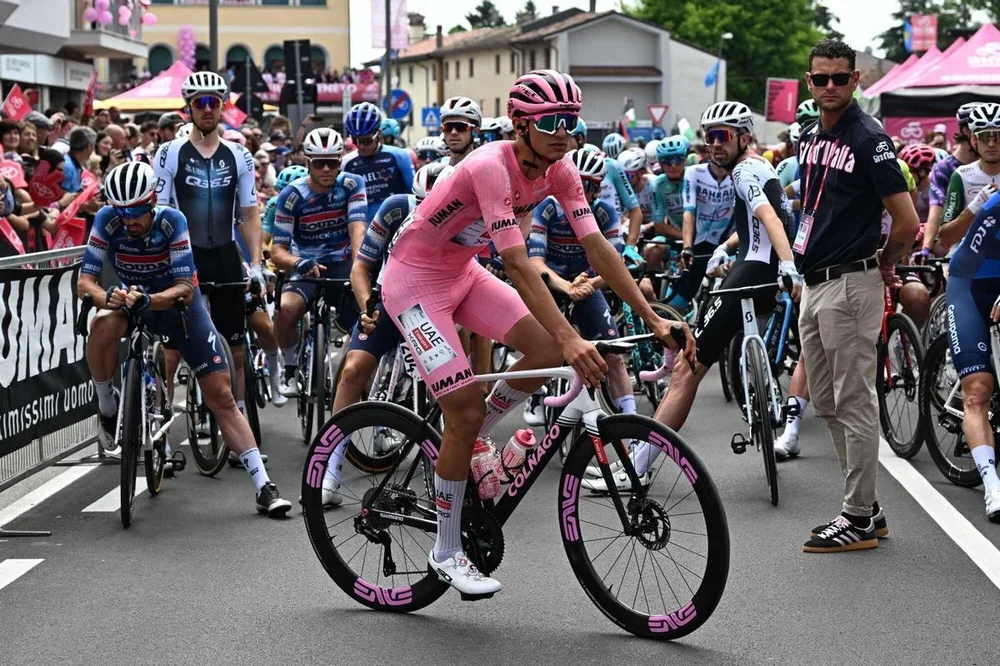
For the rider who wears it, the *maglia rosa* changes the race. From that moment on, everyone watches them, and their team is “obliged” to take control of the stage race. Their team must work harder, control breakaways, protect them from the wind, position them well before climbs, and prevent them from losing time in a crash or an unexpected split. Being the leader brings prestige, but it also wears you down.
**To wear… or not to wear the *maglia rosa*?**
That’s why some favorites don’t always want to take it too early. In the first week, wearing the *maglia rosa* can be a poisoned gift: exposure, responsibility, and many kilometers defending something that might be better conquered later. In this year’s edition, a bad time trial, a collapse on the Blockhaus, a crisis in the Dolomites, or a poor day on the road to Piancavallo can erase in half an hour what was built over two weeks.
For new fans, the key is simple: the *maglia rosa* answers the most important question of each day: Who is winning the Giro? But it also opens many others: Is the leader truly strong? Can their team defend them? Do they have a margin in the mountains? Will they handle the pressure? Are they a solid champion or a provisional leader awaiting the big battle?
The Giro is not won by wearing the *maglia rosa* for a day, but by keeping it until the end. And when the leader arrives with it in Rome, after three weeks of competitive attrition along Italian roads (and this year also Bulgarian roads), the story is sealed.